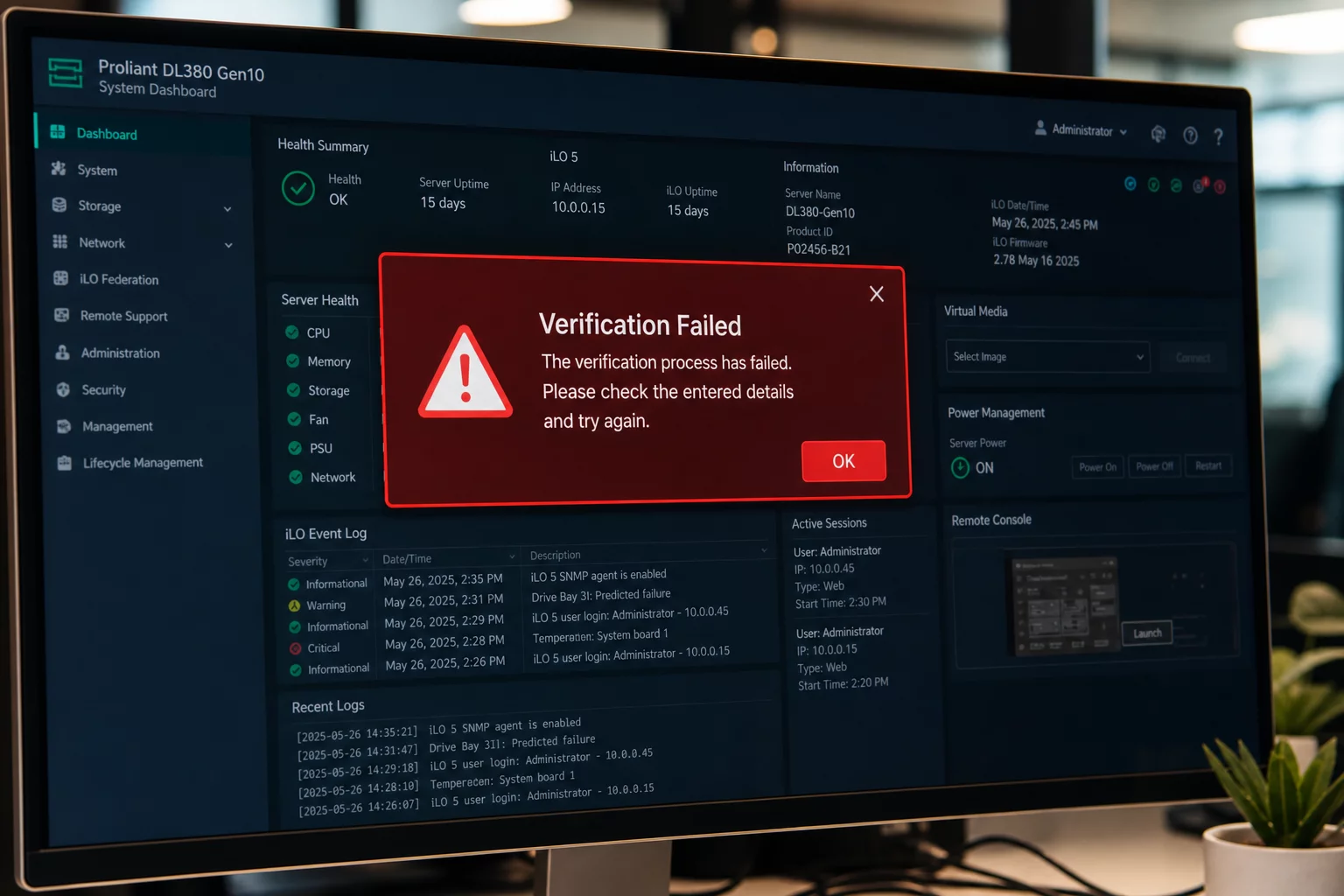
Incident Context and Vulnerability Overview
Relying entirely on successful daemon return codes creates a dangerous operational illusion. Storage daemons frequently complete snapshot transfers without validating whether the underlying volume shadow copies froze write transactions cleanly, leaving administrators holding fragmented, unbootable archive archives.
Execution Sequence Breakdown
A typical automated snapshot routine completes writing archive volumes without testing file integrity or running sandbox boot verifications:
# backup-daemon --target=/mnt/nfs/storage --compress
                                        [INFO] Snapshot pool-39 created in 42s (480GB written)
                                        [WARN] VSS shadow provider signaled timeout during state flush; operation continued
                                        [INFO] Job finished with exit code 0. Zero dry-run mounts performed.
Direct Consequences & Operational Cascades
When unexpected infrastructure outages occur, the lack of previous verification turns what should be a routine thirty-minute restore into an open-ended crisis:
- Corrupted transactional log chains render database clusters unable to replay pending commits after cold image deployment.
- Hypervisor disk images fail partition mount checks due to incomplete volume headers caused by unhandled write locks.
- Engineers spend hours attempting manual file carving while business operations remain halted across all user endpoints.
Recommended Correction Protocol
Eliminating silent backup failure requires converting passive storage dumps into active, self-testing operational pipelines:
- Implement synthetic automated sandbox restores that spin up virtual machines in isolated subnets immediately following job completion.
- Enforce programmatic integrity checks including cryptographic checksum matching and filesystem journal verification.
- Require periodic application-level health queries against restored databases before marking any backup set as certified.
Architectural Recovery Playbook
Immediate Isolation & Safe-Mode Triage
Mount the suspect backup set read-only inside an isolated virtual sandbox. Do not attempt direct in-place recovery on original physical volumes until partition tables and file system journals are fully verified.
Integrity Checks & Consistency Audit
Execute automated block-level hash verification and test application startup routines in safe mode. Ensure all foreign key relationships and write-ahead logs complete recovery without throwing truncation warnings.
Preventative Telemetry Rules
Configure monitoring alarms to flag any backup job that executes without automated spin-up verification. Mandate recurring weekly bare-metal restore drills across all tier-one production nodes.
Frequently Asked Engineering Queries
Backup agents only monitor stream transfer completion and socket stability. They do not evaluate internal logical consistency, file locking states, or guest OS boot capacity.
Modern hypervisors can boot temporary virtual machines directly from compressed backup snapshots via instant-mount protocols, allowing automated sanity tests without full clones.
Key verification metrics include guest operating system heartbeat detection, successful database query execution, and cryptographic checksum reconciliation against source snapshots.
Incident Review Discussions
Technical NotesThe automated failover diagnostics drastically reduced our incident recovery window. Replacing brittle shell scripts with the telemetry playbook isolated memory leaks in our Kubernetes cluster in under four minutes.
STATUS 200 OK • LATENCY: 14ms • ROOT_CAUSE: OOM_KILLER_EVACUATEDSubmit Architecture Observation
Join the discussion on post-incident verification loops and safeguard mechanisms.