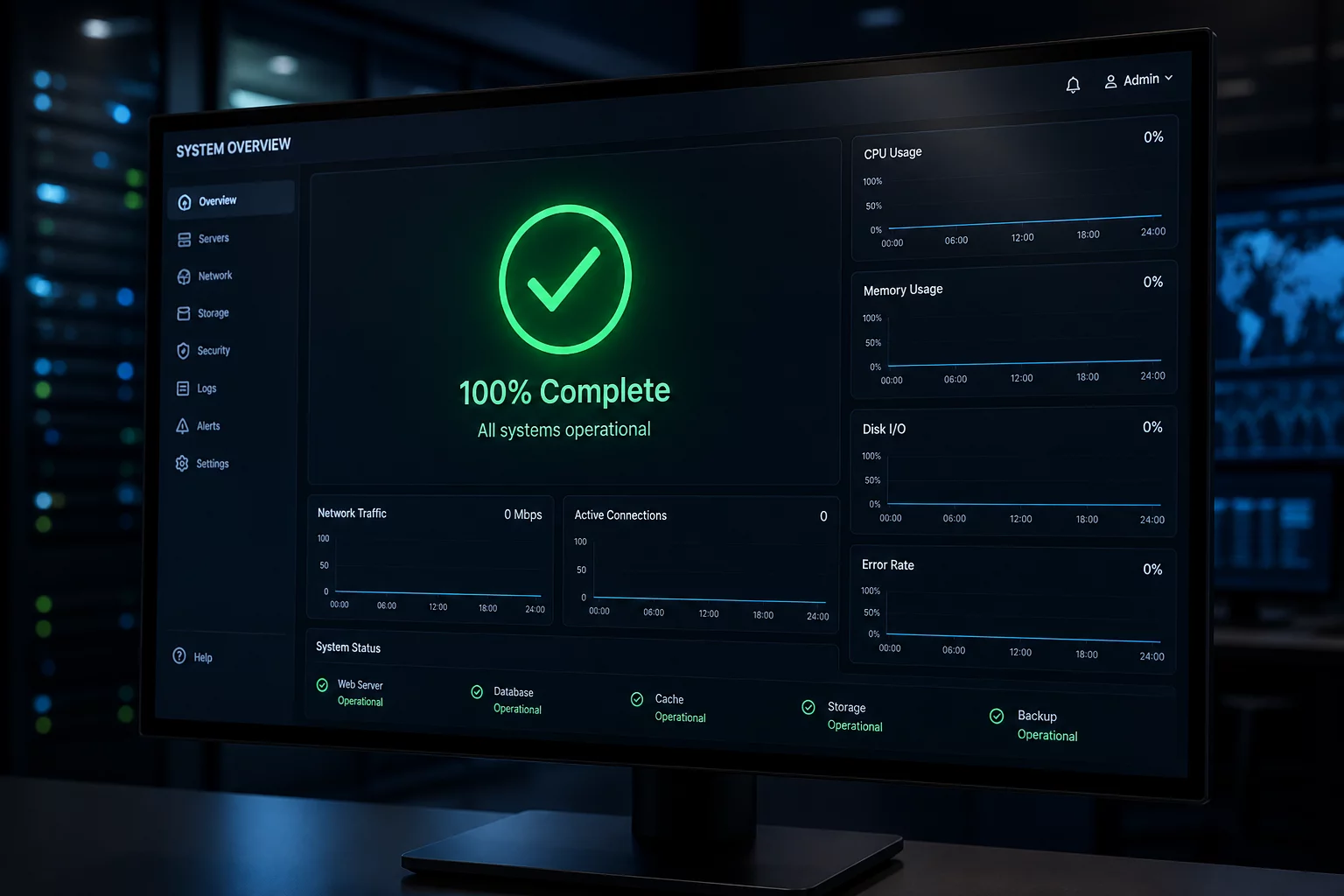
The False Promise of Green Hypervisor Heartbeats
During a critical mid-quarter maintenance failover, a multi-node accounting and billing service suffered an unexpected storage volume detachment. Automated orchestration pipelines executed the standard disaster recovery runbook immediately, bringing up replacement virtual machines on secondary hypervisor nodes in less than nine minutes. The orchestrator dashboard showed bold green checkmarks across all infrastructure components, signaling that every disk image was mounted and each target operating system was operational.
The incident response channel closed the severity alert right away, assuming normal business continuity. But the underlying relational database had mounted with broken table indexes and uncommitted log state buffers. While SSH and ping checks passed without error, every user transaction targeting customer invoices failed with internal server errors. Two hours elapsed before real customers alerted support teams that the payment portal remained completely non-functional.
Root Failure Analysis
The recovery criteria relied strictly on hypervisor guest tools and TCP port listening status instead of executing synthetic application queries, deep transactional probes, and end-to-end user session verification.
Technical Breakdown of the Verification Gap
System infrastructure health checks frequently stop at layer 3 and layer 4 metrics. Operating systems boot cleanly, network adapters bind IP addresses, and database daemons spawn background worker processes. True business availability requires application-level handshake validations across message queues, authentication tokens, caching clusters, and write consistency checks on persistent tables.
Sequence of Incidents
Detailed progression from the initial storage disruption to final transactional sign-off.
- 03:15 UTC: SAN controller failover triggers dirty unmount on primary database cluster.
- 03:24 UTC: Automated snapshot restore finishes, hypervisor marks virtual instances healthy, and the incident ticket closes prematurely.
- 05:38 UTC: Finance operations escalate payment processing lockups, uncovering locked tables and dangling foreign key pointers.
Corrective Infrastructure Steps
Automated functional validation wrapper executed before passing traffic to production gateways.
#!/bin/bash
                                                    # Validate end-to-end transactional integrity before declaring recovery clean
                                                    echo "[RUNNING] Executing synthetic write-read sequence..."
                                                    pytest --disable-warnings /opt/sre/probes/test_payment_gateway.py
                                                    if [ $? -eq 0 ]; then
                                                    echo "[SUCCESS] Application transactional pipeline functional."
                                                    consul kv put cluster/billing/dr_status "VERIFIED_ONLINE"
                                                    else
                                                    echo "[CRITICAL] Functional test failed! Halting traffic router update."
                                                    exit 1
                                                    fi
Post-Restore Validation Criteria
Mandatory gates that must pass prior to marking any recovery ticket complete.
- Execute mock API transactions using dedicated synthetic customer tenant credentials.
- Confirm read/write disk IOPS consistency and verify no dangling database lock states.
- Perform TLS handshake and session authentication check against the live ingress edge.
Architectural Mandates for Disaster Recovery Testing
No disaster recovery procedure is finished simply because computing assets return online. Modern high-availability systems require explicit sign-offs consisting of synthetic end-to-end user journeys, continuous transactional probes, and strict service-level health checks. Engineering organizations must eliminate single-layer operational assumptions and embed deep diagnostic suites into automated recovery loops.
Technical Discussion
Peer review and sysadmin engineering remarks
No technical remarks yet. Be the first engineer to submit a diagnostic evaluation below.
Submit Technical Response
Share post-mortem observations or query specific diagnostic parameters.